
 (720) 386-5650
Why Commercial Door Lock Replacement in Denver Is Often More Involved Than It Looks
Most commercial lock calls start the same way: a business owner or manager notices the door isn’t latching right. Also, the key is hard to turn, or the lock has stopped working altogether. The assumption is that a quick part swap will sort it out. Sometimes that’s true. Sometimes the job is more involved than it first appears. This means cutting corners on a commercial door lock repair can cause bigger problems down the road.
This post walks through what a proper commercial door lock mechanism replacement actually involves, why certain door types require full door removal to service correctly, and what business owners in Denver should expect when they call a commercial locksmith for a job like this.
What a Real Commercial Lock Replacement Job Looks Like
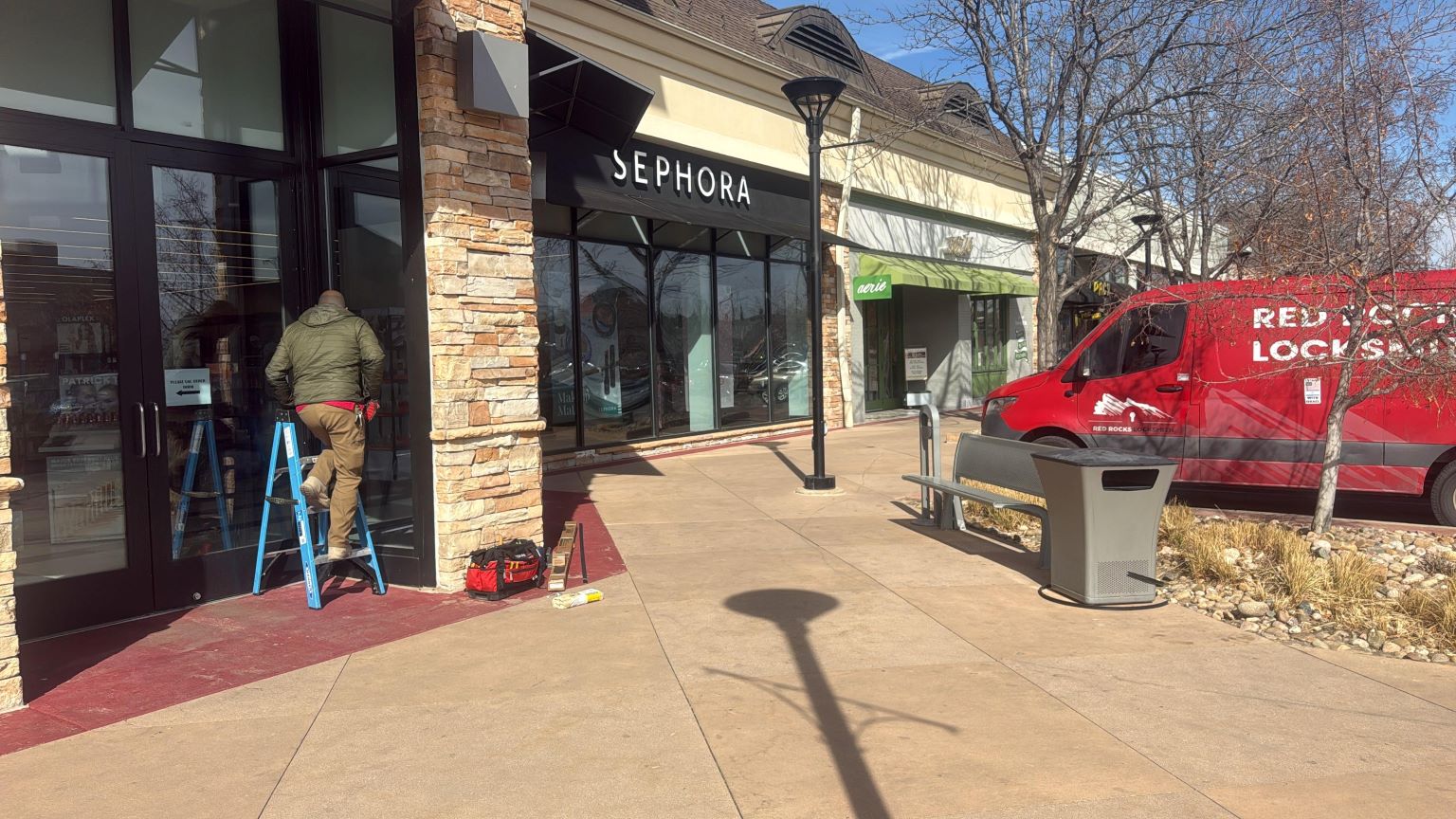
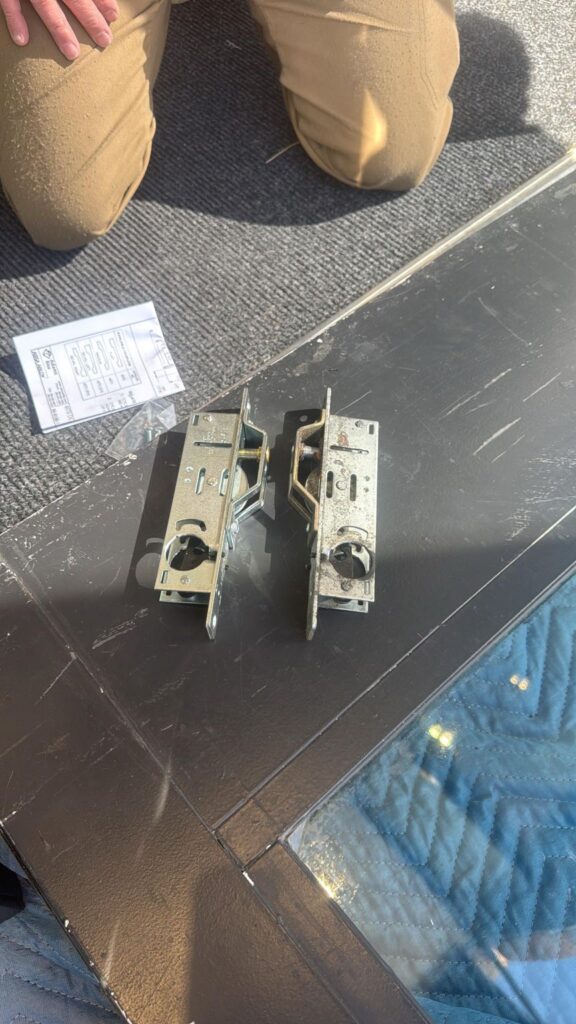
The call came in as a lock not functioning on a commercial glass door at a busy retail location in Denver. On arrival, the technician confirmed a broken internal lock mechanism. The hardware had failed completely and needed to be replaced, not just adjusted or lubricated.
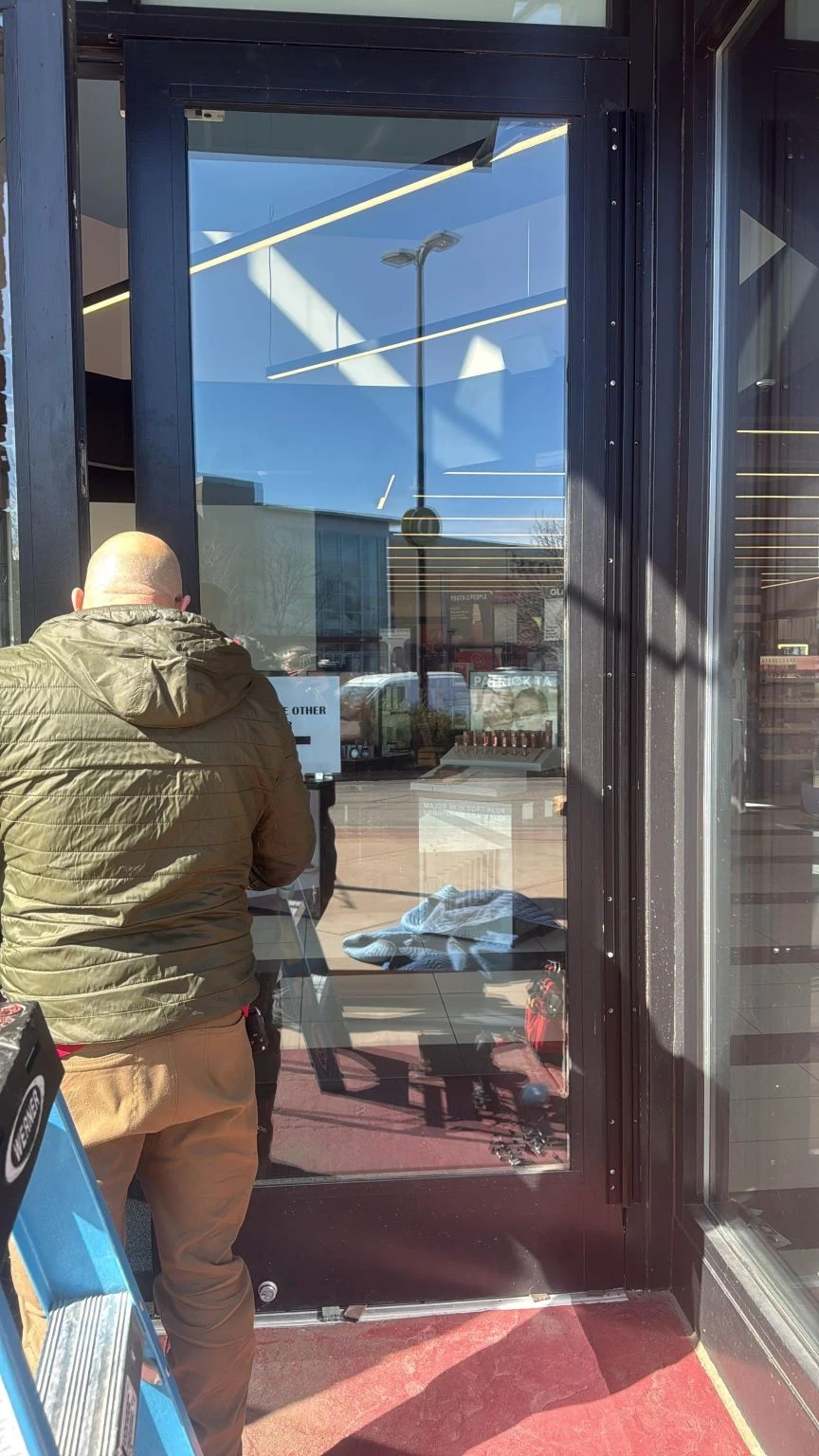
Here’s where the job got more involved. On commercial glass doors with certain frame and door constructions, the internal lock mechanism is not accessible from the outside face. The only way to properly remove and replace the hardware is to take the door off its hinges entirely, work on the mechanism with the door laid flat, then rehang the door and set the alignment before reinstalling all hardware.
That’s exactly what happened here. The door came off, the mechanism was replaced with new commercial-grade components, and the technician also installed a continuous hinge along the full door height. That last step matters more than most people realize, and it’s worth explaining why.
Why Continuous Hinges Matter on Commercial Glass Doors
Standard commercial doors use two or three individual hinge points spaced along the door height. Those hinge points carry the full weight and stress of the door every time it opens and closes. Over time, especially on high-traffic commercial entries, that concentrated stress causes the door to shift slightly out of square. A door that hangs even a small amount out of alignment puts uneven pressure on the lock mechanism every time someone operates it. That uneven pressure is one of the most common causes of premature lock mechanism failure on commercial doors.
A continuous hinge, sometimes called a piano hinge, runs the full height of the door. It distributes that load evenly across the entire length. The result is a door that stays in proper alignment far longer. It reduces wear on the lock mechanism, and operates more smoothly for the life of the hardware. When a commercial door lock fails and the door is already coming off for mechanism replacement, installing a continuous hinge at the same time is a straightforward upgrade that prevents the same problem from recurring.
On this job, the continuous hinge installation was done while the door was already off. No additional disruption to the business, and a significantly better outcome for the long term.
How Commercial Lock Replacement Differs From Residential Work
Residential and commercial locksmith work share some overlap but they’re genuinely different in terms of hardware, tools, and approach. Understanding those differences helps business owners set accurate expectations when calling for service.
| Factor | Residential Locks | Commercial Locks |
|---|---|---|
| Hardware weight and size | Lighter, standard residential grade | Heavier, built for high-traffic daily use |
| Lock mechanism complexity | Simpler internal components | More complex, often with additional latch and deadlatch systems |
| Door construction | Wood or fiberglass in most cases | Aluminum, steel, or glass with specialized frames |
| Access for repairs | Usually accessible from the face | Often requires door removal for internal mechanism work |
| Hinge systems | Standard butt hinges | May require continuous hinges for proper load distribution |
| Key and cylinder types | Standard residential keyways | Restricted keyways, master key systems, access control integration |
| Compliance considerations | General building code | ADA requirements, fire codes, exit device regulations |
These differences mean that a technician who primarily handles residential locks may not have equipment to properly service a commercial door. The tools are different, the hardware knowledge is different, and the job process itself can be quite different, as this job demonstrates.
When Commercial Door Removal Is the Right Call
Door removal sounds like an extreme step. In practice, on certain commercial door constructions, it’s the correct approach. Attempting to access the mechanism without removing the door causes more damage than it prevents. A professional commercial door lock service technician can identify quickly whether the door needs to come off. Or whether the mechanism is accessible without that step.
Glass and Aluminum Frame Doors
Commercial glass doors with aluminum frames are common in retail and office environments across Denver. Particularly in shopping centers, mixed-use buildings, and storefronts built in the last 30 years. On these doors, the lock mechanism is typically inside the door stile – the vertical edge of the door. Accessing that internal housing without removing the door risks cracking the glass, damaging the frame, or stripping the mechanism housing itself. Taking the door off, working with it horizontal, and reinstalling it is cleaner and faster. Also, less likely to cause secondary damage.
Doors With Embedded Multi-Point Lock Systems
Some commercial doors use multi-point locking systems where the mechanism operates latch points at multiple locations along the door edge simultaneously. These systems have more internal linkage than a single-point lock and are even less accessible without door removal. If the internal linkage is broken or binding, the only way to properly diagnose and replace the components is with the door off the frame.
Doors Already Hanging Out of Alignment
If a commercial door is visibly out of square – binding on the frame, not closing flush, or showing gaps along the top or sides – attempting lock work without addressing the alignment problem first is counterproductive. The door may need rehinging or hinge replacement before the lock can function correctly. Removing the door, correcting the alignment, and then installing new hardware in the correct position gets a lasting result. A patch job on a misaligned door just delays the next call.
What to Look for in a Denver Commercial Locksmith
Commercial lock work carries more consequences than a residential job if it’s done poorly. A business entry that doesn’t secure properly is a liability. A door rehung slightly out of alignment will continue wearing on new hardware. A lock mechanism installed in a door that hasn’t been properly checked for alignment will fail again sooner than it should.
When choosing a commercial locksmith in Denver, a few things are worth verifying before the technician shows up.
Experience with commercial door hardware specifically. Ask whether the company handles commercial door lock jobs regularly, not just residential service. There’s a meaningful difference, and it shows up in how quickly they diagnose the problem, whether they carry the right parts on the truck, and whether they know when door removal is necessary. You can also verify a locksmith’s Colorado state license through the Colorado DORA license lookup before scheduling service.
Upfront pricing before work begins. Commercial jobs can involve more labor and materials than a simple lock swap. A reputable provider gives you a quote that covers the full scope – mechanism replacement, any hinge work, door removal and reinstallation if needed – before starting. Surprises on the invoice after a commercial job are not acceptable.
Availability when your business needs it. A commercial entry that fails during business hours affects your customers and your revenue. After-hours failure leaves your property unsecured. A lockout service that operates around the clock means you’re not waiting until morning to get a broken commercial door back in service.
Commercial Lock Considerations Specific to Denver Properties
Older Retail and Mixed-Use Buildings Along Commercial Corridors
Denver has a large stock of commercial properties built in the 1970s through 1990s along corridors like Colfax, Broadway, South Colorado Boulevard, and the shopping centers throughout the metro area. Door hardware from that era has often been in place for decades, and while the frames and glass may still be structurally sound, the internal lock mechanisms are at the end of their service life. Symptoms like a stiff key turn, a latch that doesn’t retract cleanly, or a deadbolt that requires force to engage are all signs that the internal components are wearing out. Replacing the mechanism before complete failure costs less and causes less disruption than an emergency call after the lock seizes entirely.
High-Traffic Retail Entries in Shopping Centers
Retail entries in Denver shopping centers take a significant amount of daily use. A busy storefront door may open and close hundreds of times per day. That usage accelerates wear on lock mechanisms and hinges compared to a typical office door. Continuous hinges, which distribute load evenly across the full door height rather than concentrating stress at two or three hinge points, are a practical upgrade for any high-traffic commercial entry and represent good return on investment for retailers dealing with recurring hinge or lock issues.
ADA Compliance and Commercial Door Hardware
Denver businesses with public-facing entries are subject to ADA requirements around door hardware operability. Lock mechanisms and door handles on accessible entries must meet specific force and operability standards. When replacing commercial door hardware, it’s worth confirming that the new components meet current ADA requirements, particularly on primary public entrances. A knowledgeable commercial locksmith will flag any compliance issues during assessment rather than simply swapping the old hardware for a like-for-like replacement that may not meet current standards.
What to Expect During a Commercial Lock Mechanism Replacement
Business owners who haven’t had this type of work done before often aren’t sure what to expect in terms of time, disruption, and process. Here’s a realistic breakdown of how a job like this one typically proceeds.
Assessment on arrival. The technician examines the door, frame, existing hardware, and alignment before recommending a course of action. On some calls, the issue is simpler than expected and door removal isn’t needed. On others, like this job, the assessment confirms that door removal is the correct approach. This is also when the technician provides a full quote covering all the work involved. Our commercial door lock service team explains every step before starting.
Door removal and mechanism replacement. For glass and aluminum frame commercial doors, the door is carefully removed and laid on a protected surface. The failed mechanism is removed, the housing is inspected for any secondary damage, and the new mechanism is installed and tested before the door goes back up.
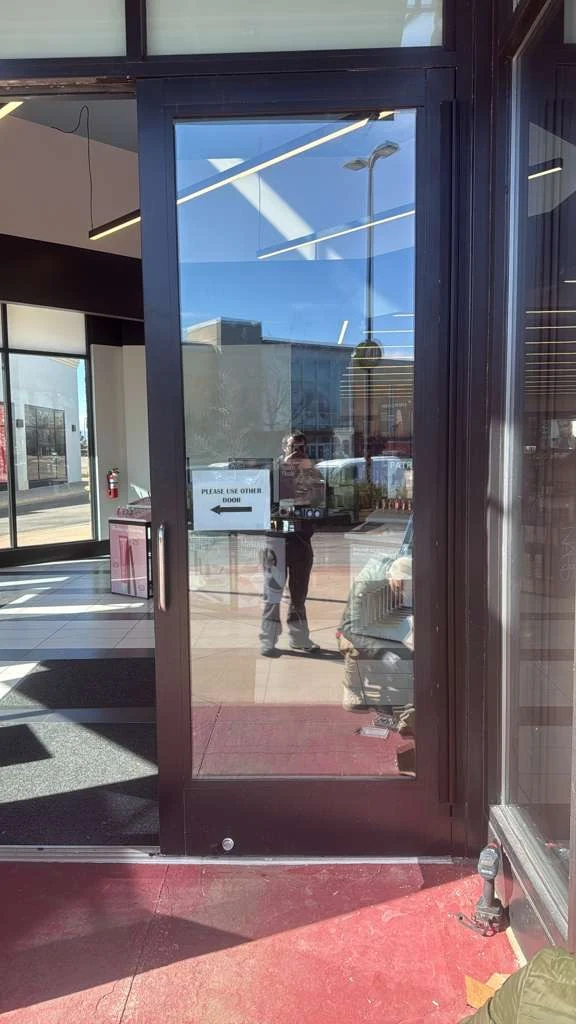
Hinge installation and door rehang. If a continuous hinge is being installed, this is done with the door off. The door is rehung and the technician checks alignment carefully – the door should swing freely without binding, close flush with the frame, and latch and deadbolt smoothly without resistance.
Final testing and confirmation. Before leaving, the technician tests the full operation of the lock multiple times, confirms the door alignment is correct, and walks through the completed work with the business owner or manager. Any new keys cut during the service are tested in the new mechanism.
Denver Metro Commercial Locksmith Coverage
Red Rocks Locksmith handles commercial door lock service for businesses across the Denver metro area, including retail locations, office buildings, restaurants, and multi-tenant commercial properties in neighborhoods and districts like Cherry Creek, LoDo, RiNo, Capitol Hill, the Denver Tech Center, Baker, Five Points, the Highlands, and surrounding communities in Arvada, Lakewood, Centennial, and Aurora. Mobile dispatch means the technician comes to your location with the tools and parts needed to handle commercial door and lock work on-site.
For business owners managing multiple properties or locations, our access control installation services also provide longer-term security solutions that reduce reliance on mechanical keys while maintaining full control over who can enter which areas and when.
Summary
Commercial door lock mechanism replacement is not always as simple as swapping a part. Certain door constructions require full door removal to access the internal hardware correctly. When that work is already underway, adding a continuous hinge is a practical upgrade that distributes door load evenly and extends the life of the new mechanism significantly.
For Denver businesses, choosing a commercial locksmith with specific experience in door hardware, transparent pricing, and the tools to handle more involved jobs on-site is worth the time it takes to ask the right questions before someone shows up at your door.
Next steps:
• Schedule a commercial lock inspection if your hardware is sticking, stiff, or not engaging cleanly
• Ask about continuous hinge installation when replacing mechanisms on high-traffic commercial doors
• Verify your locksmith’s Colorado license before scheduling through the Colorado DORA lookup tool
• Contact Red Rocks Locksmith for commercial door lock replacement across Denver and the surrounding metro area
Any other question?
Frequently Asked Questions
How do I know if my commercial door lock mechanism needs replacing vs. just servicing?
If lubricating the mechanism and adjusting the strike plate doesn’t resolve the issue within a short period, the internal components are likely worn or damaged. Signs that point toward replacement rather than servicing include a latch that doesn’t retract fully, a key that turns but doesn’t operate the bolt, internal grinding or resistance that wasn’t there previously, and any situation where the door was forced or the lock was tampered with. A technician can confirm during assessment which approach is appropriate.
Does the door have to be closed to the business during a commercial lock replacement?
It depends on the job. For a mechanism replacement that requires door removal, the entry point is temporarily out of service while the door is off the frame – typically 30 to 60 minutes for a straightforward job. Most businesses either redirect customers to another entrance during that window or schedule the work during off-hours. The technician can advise on timing based on the specific door and scope of work.
What is a continuous hinge and is it worth the added cost?
A continuous hinge, sometimes called a piano hinge, runs the full height of the door rather than using two or three individual hinge points. Because it distributes the door’s weight and movement stress evenly across the entire door height, it reduces the wear that concentrated hinge points create over time. For commercial doors that see heavy daily use, the extended hardware life and reduced frequency of future service calls typically make it a worthwhile investment.
Can you rekey the new lock mechanism at the same time?
Yes. Rekeying can be done at the same time as mechanism replacement, which is often a good idea – particularly after a lock failure caused by a break-in attempt, after staff turnover, or when taking over a commercial space and wanting to ensure no previous key holders retain access. The technician can rekey on-site and cut new keys immediately.
How can I verify that Red Rocks Locksmith is a licensed commercial locksmith in Colorado?
Colorado requires locksmiths to hold a valid state license issued through the Division of Registrations. You can verify any provider’s license number through the Colorado DORA license lookup tool before scheduling service. A legitimate commercial locksmith will provide their license number without hesitation when asked.
Do you handle commercial lock replacement outside of regular business hours?
Yes. Commercial lock failures don’t wait for convenient timing. Red Rocks Locksmith provides after-hours service for commercial lock and door hardware emergencies across Denver. If your business has a door that won’t secure at the end of the day or a lock that failed during off-hours, contact our Denver lockout service line and a technician will dispatch to your location.
Where in Denver does Red Rocks Locksmith provide commercial door lock service? We cover the full Denver metro area for commercial locksmith work, including Cherry Creek, LoDo, RiNo, Capitol Hill, the Denver Tech Center, Baker, Five Points, the Highlands, and surrounding communities. For a full list of service areas, visit our locations page or call to confirm coverage for your specific address. The Denver Police Department’s non-emergency resources are also available for situations involving property crime or security concerns that go beyond a locksmith’s scope.