
 (303) 495-7579
The Antique Gun Cabinet Lock Was Picked. The Key Was Cut. Now the Real Restoration Begins.
Not every locksmith call involves a door. Some of the most interesting jobs that come through involve furniture pieces – antique cabinets, old safes, heirloom chests, and collection cases that have been locked for years, sometimes decades, with no key in sight. This was one of those calls.
A beautiful two-piece hexagonal gun cabinet set arrived at our Fort Collins location locked up tight and keyless. The cabinet itself was clearly worth saving – solid wood construction, glass display panels, a gun stand still inside, and the kind of craftsmanship that simply doesn’t come standard on anything made today. The lock was a small cam mechanism that had outlasted its key by an unknown number of years. The job was to open it cleanly, service what was there, and cut a working key. All without leaving a mark on the wood.
There’s a second chapter to this one worth knowing about. Once the lock work was done, the cabinet set headed directly to our friends at G. Michaels Restoration in Fort Collins for a full professional restoration. New finish, surface repair, and all the woodwork attention these pieces deserve. This post covers both sides of what happened and why this kind of collaboration gets an heirloom piece from broken and inaccessible to fully restored and functional.
What This Job Involved
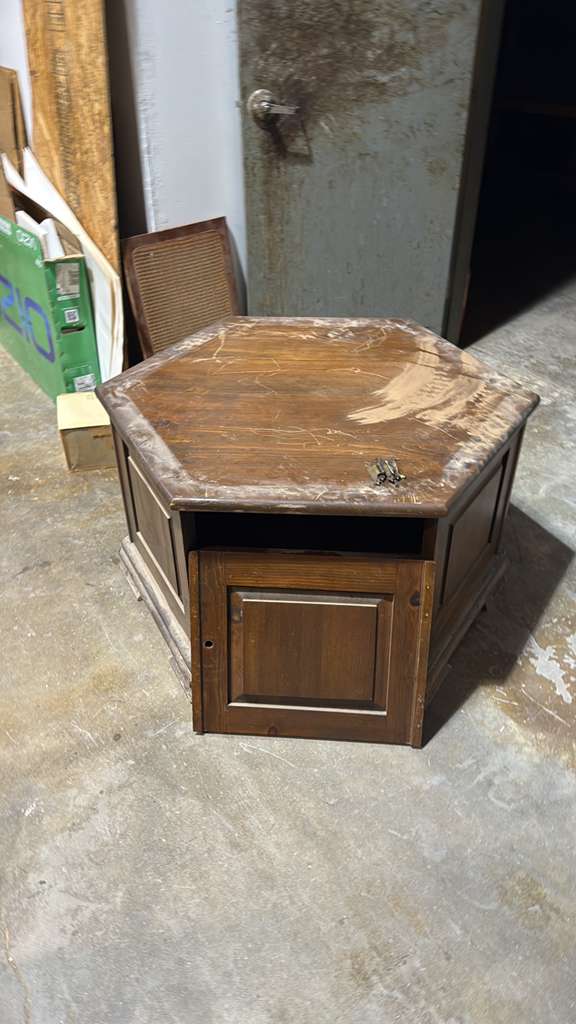
The set arrived as two separate pieces. The upper section is a tall hexagonal display cabinet with glass panels on multiple faces, decorative wood framing, and a rotating gun stand mounted on the interior base. The lower section is a matching hexagonal storage base with a paneled cabinet door and a hexagonal top surface that showed significant wear from years of use. Both pieces were locked. Neither had a key.
On older cabinet furniture like this, the lock is almost always a cam lock or a simple wafer-tumbler mechanism. These are not high-security locks by any measure, but they’re also not designed for easy access without the original key. The cylinder is small, the keyway is narrow, and the wrong approach during picking or bypass can scratch the surrounding wood or damage the cylinder housing permanently, which matters a great deal when the piece is heading into restoration afterward.
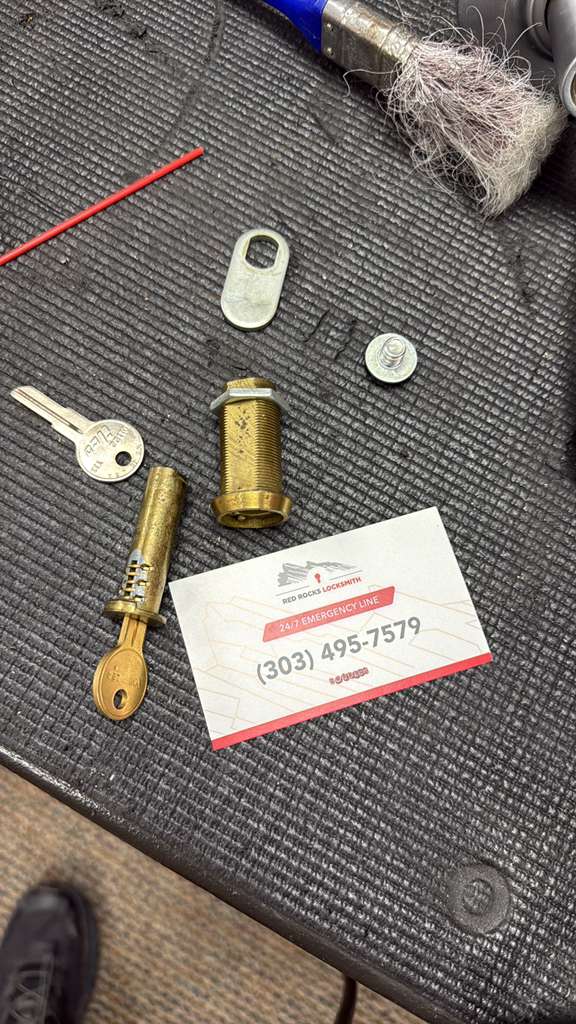
Our technician picked both locks cleanly using the non-destructive technique that’s also applied during a professional lockout service – controlled, methodical, no force applied to the surrounding wood. Once open, the cylinder from the lower cabinet door was removed and disassembled on the workbench to assess the internal condition.
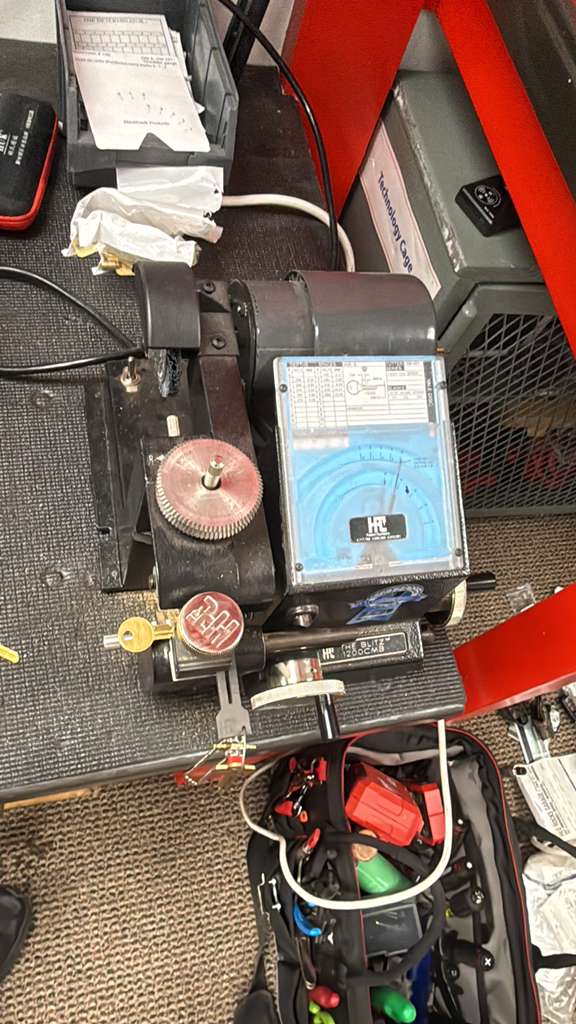
The internal components were worn but functional. The cam, the cylinder body, and the retaining hardware were all intact. After the mechanism was cleaned and the cylinder confirmed to be serviceable, a new key was cut on-site using the HPC Blitz key cutting machine kept in the Red Rocks van. The key was cut from the cylinder’s internal configuration and tested in both directions before the cabinet was declared fully operational.
The wood came through without a scratch. That was the requirement, and it was met.
How Non-Destructive Cabinet Lock Picking Works
Picking a cabinet lock without damaging the surrounding wood is a different kind of challenge than picking a door lock. The cylinder is recessed into the wood, often flush with or just proud of the door face. There’s no room to work around the edges carelessly, and the furniture surface immediately around the keyhole is exactly where scratches show most visibly on an older piece with a worn finish.
The technique involves applying light rotational tension to the cylinder while using a pick to manipulate the internal wafers or pins one at a time until each one sets. On a cam lock, the cylinder typically rotates 90 degrees to disengage the cam from the cabinet catch. The pick has to work within the narrow keyway without resting against the wood face, which requires the right tool profile and a deliberate, unhurried approach.
This is the same fundamental technique used during a residential lockout service or when a safe needs to be opened without the combination. The goal is always the same: get the lock open without damaging the lock, the door, or anything around it. On an antique piece scheduled for professional restoration, that standard matters even more than usual.
Cutting a New Key for an Old Cabinet Lock
Once the cabinet was open and the cylinder removed, cutting a new key came down to reading what the cylinder’s internal configuration actually was. Cam locks and wafer-tumbler mechanisms retain their internal configuration even after years of disuse. The wafers or pins are spring-loaded and hold their positions. By examining the cylinder carefully, a skilled locksmith can determine the correct key cut depths for each position and translate that into a working key.
Our technician used the HPC Blitz key cutting machine in the Red Rocks van. This is a professional-grade cutter capable of handling a wide range of key blanks, including the smaller cabinet and furniture key profiles that don’t come off a standard residential key blank. The process is the same in principle as any key duplication service, but with the added step of determining the correct cut from the cylinder itself rather than from an existing key.
The finished key was tested in the cylinder before reinstallation, confirmed to operate the cam smoothly in both directions, and handed over with the cabinet. No more guessing at what key fits. No more locked cabinet. A working key, cut correctly, ready to use for however long this piece is in service.
Where the Cabinet Goes Next: G. Michaels Restoration in Fort Collins
With the lock work complete and both cabinet pieces accessible, the set went directly to G. Michaels Restoration, located at 113 Hickory Street in Fort Collins. They’re a long-established Fort Collins furniture restoration and antique repair shop that families and collectors across the region bring their most valued pieces to when the work needs to be done properly.
The hexagonal set needs attention that goes well beyond what a locksmith handles. The upper cabinet’s wood framing and finish have aged and need refinishing. The lower base piece has significant surface scratching and wear across the hexagonal top, and the finish has been compromised in multiple areas. The paneled door has some separation that needs structural attention. These are exactly the kinds of tasks G. Michaels specializes in – surface repair, finish matching, refinishing, and structural work that brings a piece back without erasing its character.
This is the full picture of what it takes to bring an heirloom piece like this all the way back. The lock gets picked and rekeyed. The key gets cut. Then the woodwork gets the attention it needs from craftsmen who specialize in exactly that. Red Rocks handles the lock and security side. G. Michaels handles the restoration. Between the two, the cabinet goes from locked, inaccessible, and worn to fully functional and professionally finished.
Lock Service vs. Furniture Restoration: Who Does What
| Task | Red Rocks Locksmith | G. Michaels Restoration |
| Non-destructive lock picking | Yes – cabinet, safe, chest, and furniture locks | Not applicable |
| Cylinder removal and servicing | Yes – clean, assess, and confirm serviceability | Not applicable |
| New key cutting | Yes – from cylinder configuration or existing key | Not applicable |
| Lock replacement | Yes – same-day if cylinder is beyond service | Not applicable |
| Surface repair and scratch removal | Not applicable | Yes – sanding, filling, and refinishing |
| Wood finish matching and refinishing | Not applicable | Yes – color matching and full refinish |
| Structural repair and re-gluing | Not applicable | Yes – joints, panels, and separation repair |
| Veneer repair or replacement | Not applicable | Yes – antique and modern veneer work |
A piece that needs both kinds of attention gets handled better when the right specialists handle each part. Trying to force a piece back into use before the lock is sorted creates problems for the restoration work. Trying to restore a surface finish on a cabinet that can’t be opened creates problems for anyone who needs access later. The right sequence matters.d rather than a full key replacement. Describing the situation clearly when you call helps the dispatcher confirm which service applies and get the right technician to you.
Types of Cabinet Locks a Fort Collins Locksmith Encounters
Cabinet and furniture locks vary more than most people expect. Understanding what type of lock a piece has helps set realistic expectations about what opening it and rekeying it involves.
Cam Locks
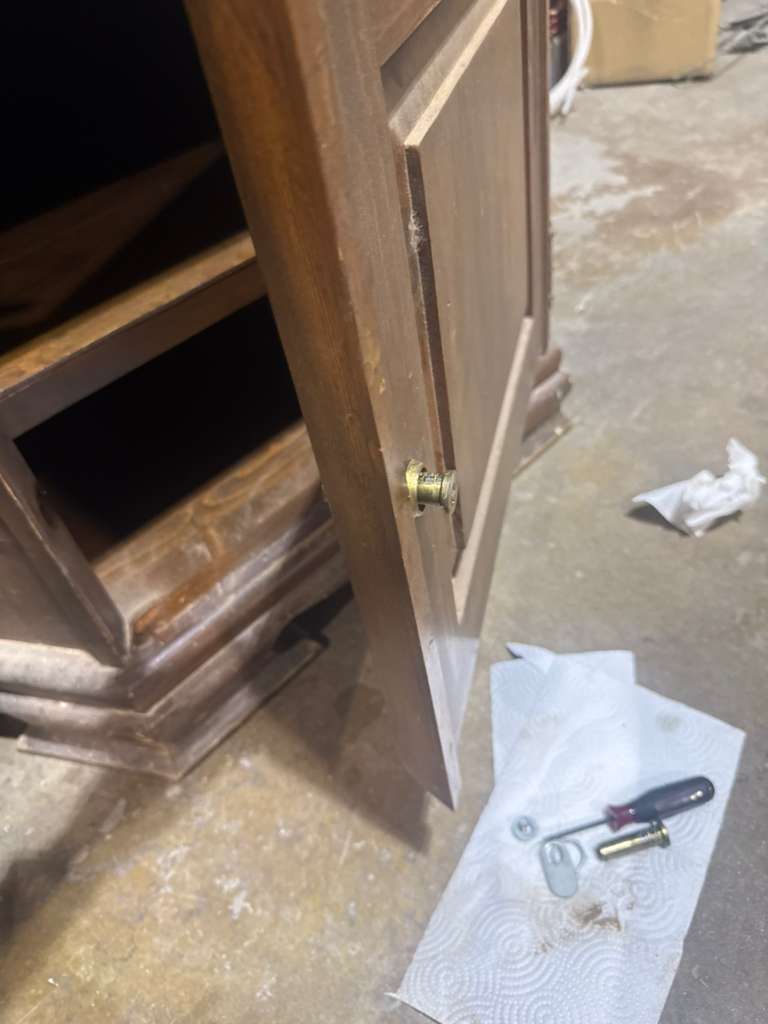
The most common lock on older display cabinets, gun cases, and storage furniture. A cam lock consists of a cylinder that rotates to move a metal cam arm across the back of the door, engaging or releasing a catch. The keyway is typically small – often a tubular or flat key profile – and the internal mechanism uses wafers rather than standard pins. These locks are straightforward to pick and easy to rekey or replace when needed. The cabinet in this job used cam locks on both pieces.
Wafer-Tumbler Locks
Similar in appearance to pin-tumbler door locks but simpler internally. Found on older cabinets, filing furniture, and mid-century storage pieces. Wafer locks use flat metal wafers that must align correctly when the right key is inserted. They can be picked with similar techniques to cam locks, and key cutting from the cylinder is generally straightforward for a trained locksmith.
Warded Locks
Common on genuinely antique pieces and vintage trunks. Warded locks use fixed obstructions inside the lock body that the key must navigate around. They provide minimal security by modern standards but are delicate to work with on valuable antique pieces because the internal wards can be fragile after decades of disuse. Non-destructive opening is usually possible but requires patience and the right tools.
Tubular Locks
Found on some gun cabinets and display cases, particularly American-made pieces from the mid-to-late twentieth century. The key is hollow and cylindrical, engaging a circular arrangement of pins. Tubular lock picks exist that can open these quickly, or they can be drilled as a last resort on a piece where the surrounding material can be repaired afterward.
When to Call a Fort Collins Locksmith for a Locked Cabinet or Furniture Piece
A lot of people assume a locked cabinet or heirloom chest with no key is a problem that requires either brute force or a trip to an antique dealer. Neither is usually necessary. A locksmith in Fort Collins with experience in furniture and cabinet locks can open most pieces non-destructively, service or replace the cylinder, and cut a working key on the same visit.
The situations where this service makes sense include inherited furniture with no key, estate pieces acquired through auction or private sale, old gun cabinets or display cases that have been locked for years, antique storage trunks or chests, and any furniture piece where the lock has failed and access is needed without damaging the surrounding wood.
The approach is the same in principle as a safe opening service – controlled, non-destructive, and focused on preserving the piece. The difference is scale and mechanism type. Cabinet locks are simpler than safe mechanisms, which generally makes the process faster, but the care required around the surrounding wood is just as important.
If the piece is also heading into restoration after the lock work, coordinating the sequence matters. Lock work first, then surface and finish work. Trying to do it in the other order means refinishing around an inaccessible lock, which creates unnecessary complications for the restoration team.
Fort Collins and Denver Metro Locksmith Coverage
Red Rocks Locksmith provides cabinet lock repair, furniture lock picking, key cutting, and full residential locksmith services across Fort Collins, Windsor, Loveland, and surrounding northern Colorado communities. Our Fort Collins team also serves clients across the broader Denver metro area for jobs involving antique furniture, gun cabinets, estate pieces, and any locked item where non-destructive opening and rekeying is the right approach.
For Denver metro clients with heirloom pieces that need both lock service and professional wood restoration, the combination of Red Rocks Locksmith and G. Michaels Restoration covers the full scope. Lock and key work from our team. Surface, finish, and structural restoration from theirs. If you’re in Fort Collins or anywhere across the Denver metro area and have a piece that needs this kind of attention, both businesses are worth a call.
Summary
A locked antique cabinet with no key is a problem a qualified locksmith can solve without damaging the piece. Non-destructive picking, cylinder servicing, and key cutting from the internal configuration are all standard parts of a cabinet lock repair job. The key is doing it correctly – with tools sized for small keyways and technique that keeps pressure off the surrounding wood.
When the lock work is done and the piece needs restoration, the right next step is a furniture restoration specialist who can match the finish, repair the surface, and handle the structural work. In Fort Collins, that’s G. Michaels Restoration. The combination gets an heirloom piece from locked and worn to fully functional and professionally restored.
If you have a locked cabinet, gun case, chest, or any furniture piece with no key – don’t force it. Call a locksmith first and find out what can be opened and rekeyed on the same visit.
Next steps:
• Email info@redrockslocksmith.com with photos of your locked cabinet or furniture piece to get a quick assessment before scheduling
• Call Red Rocks Locksmith for cabinet lock picking, key cutting, and cylinder service across Fort Collins and the Denver metro area
• Contact G. Michaels Restoration at (970) 493-8737 for professional furniture restoration, refinishing, and antique repair in Fort Collins
• Verify your locksmith’s Colorado license through the Colorado DORA license lookup before scheduling any lock work on a valuable piece
Any other question?
Frequently Asked Questions
Can a locksmith open a locked cabinet without damaging the wood?
Yes, in most cases. Cabinet and furniture locks use relatively simple mechanisms – cam locks, wafer-tumbler locks, or warded locks – that a trained locksmith can pick or bypass using non-destructive techniques. The key is using tools sized for the small keyways involved and applying technique rather than force. On antique or valuable pieces, a locksmith with specific experience in furniture locks will take extra care around the wood surface immediately surrounding the keyhole.
What happens after we open a cabinet – can we cut a new key?
Yes. Once the cylinder is accessible, a locksmith can remove it, read the internal configuration, and cut a matching key using professional key cutting equipment. This is possible even without any original key present. The resulting key is cut to the correct depths for that specific cylinder and tested before the job is finished. For more on what this involves, our key duplication service page covers the key cutting side in more detail.
What if the cylinder is too worn or damaged to reuse?
If the cylinder has seized, corroded, or broken internally, it can be replaced rather than rekeyed. Cabinet cam locks and wafer-tumbler locks are available in standard sizes, and a replacement cylinder can be fitted to the existing housing in most cases. The new cylinder gets keyed to a new key and the cabinet operates exactly as it should. The locksmith can confirm on-site whether the existing cylinder is serviceable or needs replacement after the piece is opened.
Do you handle gun cabinets specifically, or just general furniture?
Both. Gun cabinets use the same cam lock and wafer-tumbler mechanisms found on other cabinet furniture. The lock work is identical regardless of what the cabinet can store. For secured storage of firearms, Colorado residents can also review guidelines from theColorado Bureau of Investigation regarding safe storage requirements. Our team handles the lock and key side of the job. What the cabinet holds is the owner’s business.
How long does cabinet lock picking and rekeying take?
For a standard cam lock or wafer-tumbler cabinet lock, picking and rekeying typically takes 30 to 60 minutes on-site. Cutting a new key from the cylinder adds some time depending on the key profile required. If the piece needs cylinder replacement rather than rekeying, the total time is similar. More complex or damaged mechanisms take longer. The locksmith can give a more accurate estimate after seeing the piece.
Can Red Rocks Locksmith handle locked antique pieces for estates or auctions?
Yes. Estate pieces, auction acquisitions, and inherited furniture with no key are exactly the kinds of jobs our residential locksmith team handles regularly in Fort Collins and across the Denver metro. For pieces that need both lock service and wood restoration after opening, coordinating with a restoration specialist like G. Michaels in Fort Collins is worth doing before the lock work starts, so both teams understand the sequence and scope.
How do I verify a Fort Collins locksmith’s credentials?
Colorado requires locksmiths to hold a valid state license issued through the Division of Registrations. You can confirm any provider’s license status before scheduling through the Colorado DORA license lookup tool. A legitimate locksmith in Fort Collins will provide their license number without hesitation when asked.