
 (720) 386-5650
Antique Mortise Lock Not Working? Two Real Restorations From Historic Denver Homes
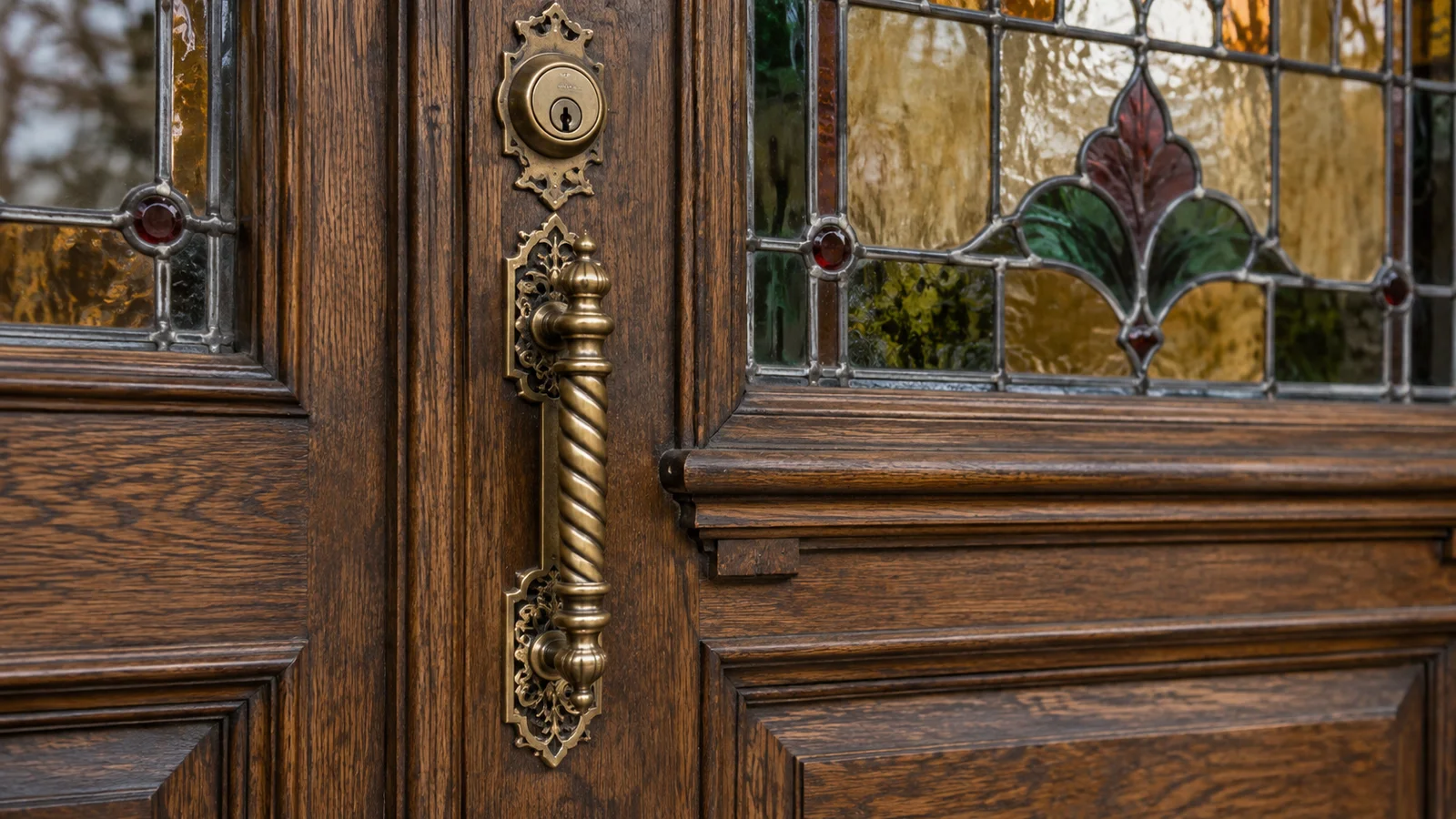
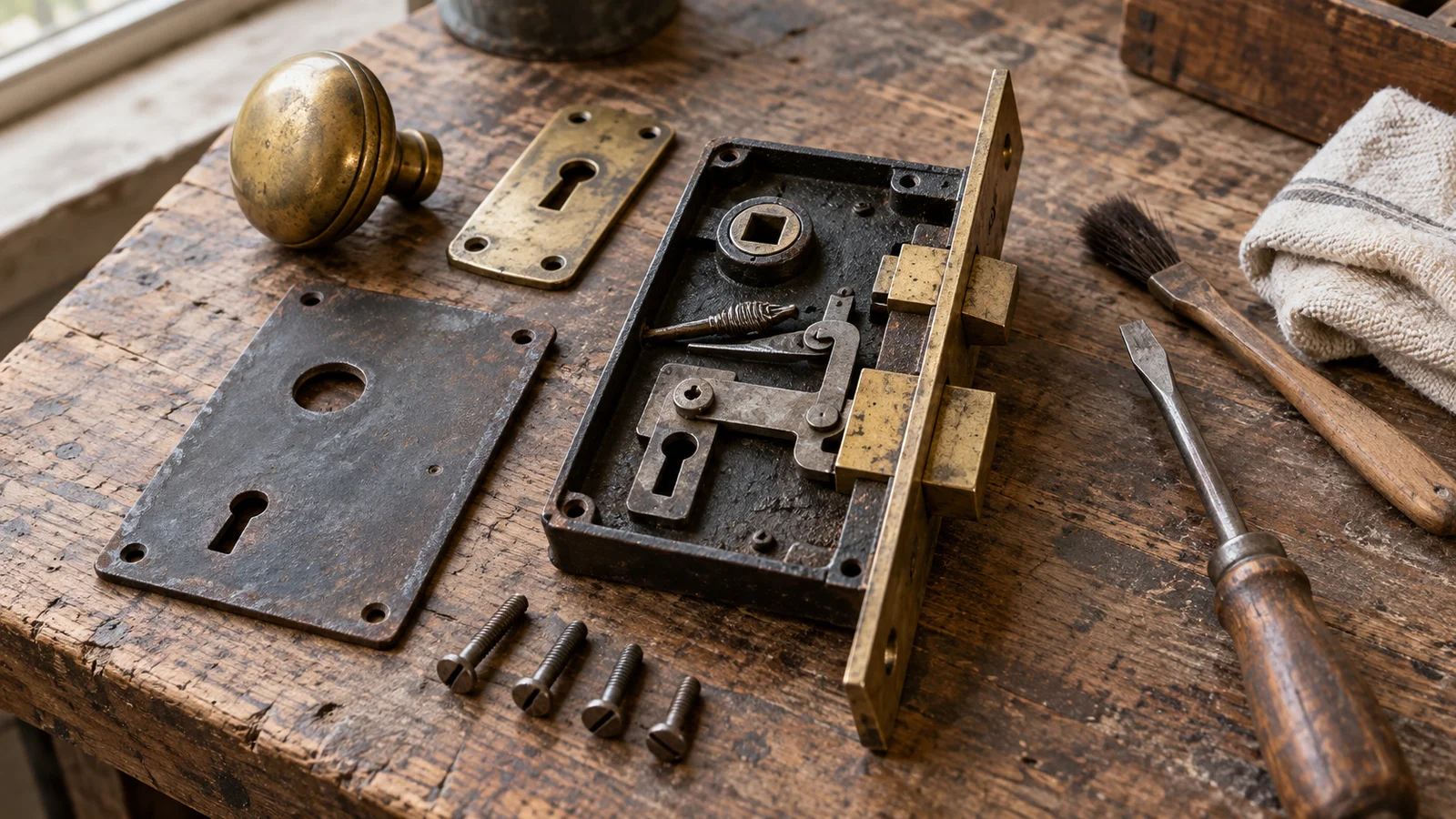
The images in this article are AI-generated illustrations of antique hardware and restoration work, not photographs of the two projects described.
Most calls about a 100-year-old door lock start the same way: the latch won't catch, the key barely turns, and the owner assumes the only fix is ripping out the original hardware for a modern replacement. It isn't. Antique lock restoration is a specialty within our residential locksmith work, and it's one of the most satisfying things we do. This case study covers two recent jobs, a Corbin mortise lock on a 1920s front door and the ornate entry hardware on a Victorian with stained glass, both brought back to full working condition with their original mechanisms.
Why These Locks Stop Working
The mortise locks installed in Denver homes between roughly 1890 and 1940 were built to last, and they largely have. Cast iron cases, solid brass bolts, copper springs. What kills them isn't wear so much as accumulation. After 80 to 130 years, the inside of the case fills with dust, dried-out oil, paint chips, and grit blown in through the keyhole by a century of Colorado weather. Old lubricants harden into something closer to varnish. Springs fatigue. Eventually the levers stick, the latch drags, and the lock gets blamed for simply being old.
The mechanism under all that grime is usually fine. That's what makes restoration possible.
Job 1: The Park Hill Front Door
The owner of a 1920s brick home called because the front door latch had stopped catching and the thumb piece on the handleset needed a hard shove to move at all. The door still had its original Corbin mortise lock, the matching brass handleset, and a lion head knocker. She'd been quoted elsewhere for cutting out the mortise pocket and installing a modern entry set, which would have meant new holes in a century-old door slab and a mismatched look against the rest of the hardware.
She asked us to fix it. We offered something better: fix it and restore it, so the whole assembly works and looks the way it did when the house was built.
What a Full Restoration Involves
The hardware comes off the door and goes to our bench. Here's the process on every antique lock restoration we take on:
- Full disassembly of the mortise case down to individual levers, springs, hubs, and the bolt
- Degreasing and cleaning every part to bare metal, removing hardened oil, dust, and paint intrusion
- Inspection of each spring and lever for cracks and fatigue
- Replacement or hand-fitting of broken parts with period-correct components, not modern substitutes
- Fresh lubrication with modern grease and a corrosion inhibitor rated for decades of service
- Polishing of knobs, plates, and handles to remove a century of tarnish (or conservation cleaning if you prefer the aged patina)
- Reassembly, bench testing through a few hundred cycles, and reinstallation in the original mortise pocket
The goal is simple: give a 100-year-old lock its next 100 years, running on its original mechanism.
The Challenges (And How We Solved Them)
Challenge 1: fatigued and snapped springs. The Corbin's latch spring had lost most of its tension, which is why the latch stopped catching. A spring that's been flexing since the Coolidge administration doesn't owe anyone anything. The catch: Corbin stopped making these parts decades ago. Our technician keeps a stock of salvaged period springs and spring steel for exactly this, and fitted a matched replacement by hand, testing the tension against the surviving springs in the same lock.
Challenge 2: lubricant turned to varnish. Inside both lock cases, the original oil had hardened into a brown film that glued the levers together. Solvent spray alone won't shift it. Every part came out of the case, soaked, and got cleaned individually before the empty case itself was stripped and degreased. This is the step quick fixes skip, and it's why a lock that's only been sprayed with oil starts sticking again within a season.
Challenge 3: an antique cylinder with a worn key. The Victorian's Yale rim cylinder still had its original profile, but the only surviving key was worn nearly smooth. Rather than swap in a modern cylinder that would've looked wrong against the ornamental plates, the technician decoded the original, cut fresh keys to factory depths, and where needed we can rekey the cylinder inside its original housing so the antique face stays on the door.
Job 2: The Victorian With Stained Glass
The second door deserves its own section. A Victorian home with original stained glass panels and cast brass hardware you simply cannot buy anymore: pierced ornamental plates, a twisted rope-pattern pull handle, and a Yale cylinder set into a decorated escutcheon. Decades of tarnish had turned all of it a dull brown, and the mortise mechanism inside had seized.
Every piece came off, went through the full restoration process, and was polished back to bright brass, bringing the detail in the original hardware back into view.
Both doors now latch, lock, and turn like new, on hardware that predates the interstate highway system.
Restore or Just Repair? (And What It Costs)
Plenty of customers call wanting one thing fixed, a latch that won't catch or a key that won't turn. That repair-only option always exists, and we'll quote it. Restoration is the step up: the same repair plus complete cleaning, part replacement, protection, and hardware polishing. Most full antique lock restorations run $350 to $650, depending on condition, parts, and how much hardware is being refinished. Here's how the realistic options stack up for a historic door:
| Comparison | Repair only | Full restoration | Modern replacement |
|---|---|---|---|
| Typical cost | Lowest | $350 to $650 | Varies, plus door modification |
| What's done | The one failing part is fixed | Complete disassembly, cleaning, parts, polishing, protection | Original lock removed, new lock fitted |
| Original hardware | Stays, uncleaned | Stays, restored | Removed or abandoned in the door |
| Door modification | None | None | Often new bores and a filled mortise pocket |
| Expected service life | A few years before the next part sticks | Decades | Decades, but the character is gone |
| Best for | Tight budgets, rental properties | Historic homes, original hardware worth keeping | Doors where the original lock is missing or destroyed |
If a lock is too far gone or already missing, we'll say so and talk through a full lock replacement honestly. That's rarer than you'd think. Cast iron and brass survive almost anything short of a fire.
Who Does This Work
Antique restoration happens at our workshop bench, not out of a parts catalog. The technician on both of these jobs handles our mortise and vintage hardware work across the metro, with a stock of salvaged period parts, spring steel, and the patience this work demands. You're welcome to drop hardware at the shop or have us pull it from the door and reinstall it when it's done.
Where We Do This Work
Historic housing stock is exactly where our Denver locksmith shop gets these calls: Capitol Hill mansions, Park Hill and Washington Park bungalows, Victorians in Five Points and Baker, and Highland foursquares. The same goes for Old Town and the historic neighborhoods around our Fort Collins location, plus Boulder's Mapleton Hill. If your home is anywhere in the Denver metro or Northern Colorado and still has its original locks, this service exists for you.
Frequently Asked Questions
How much does antique lock restoration cost in Denver?
Most full restorations run $350 to $650 depending on the lock's condition, how many parts need replacement or fabrication, and how much hardware is being polished. A repair that gets the lock working without full restoration costs less. You approve a written estimate before any work starts.
Can you fix an old mortise lock without replacing it with a modern lock?
Yes, that's the whole point of restoration. The original case, bolt, levers, and hardware stay with the door. We disassemble, clean, replace what's broken with period-correct parts, and reassemble. No modern retrofit, no new holes cut in a 100-year-old door.
My old lock has no key. Can you make one?
Usually yes. For skeleton and bit key mortise locks we fit a new key to the lever pack by hand. For antique rim cylinders like old Yale or Corbin units we can decode the cylinder and cut working copies. If the cylinder is too worn, we rekey it while keeping the original housing on the door.
Is it worth restoring locks in a historic Denver home?
For homes in Denver's older neighborhoods, original hardware is part of the property's character and value, and in designated historic districts, keeping original material is encouraged. If you're researching your home's history or district status, History Colorado is a good starting point. Mechanically, a restored mortise lock built from cast iron and brass will outlast most modern replacements.
Do you polish the hardware or keep the aged patina?
Your choice, and we ask before touching it. Full polishing removes a century of tarnish and brings brass back to bright gold, revealing details in twisted handles and ornamental plates. Some owners prefer conserving the darker aged patina, so we clean and protect the metal without polishing it bright. Both approaches protect the hardware.
Have an Old Lock Worth Saving?
A sticking mortise lock on a historic door is almost never a lost cause. Bring us the hardware or have us come pull it, and it comes back cleaned, rebuilt, polished if you want it polished, and working the way it did the year it was installed.
Call Red Rocks Locksmith at (720) 386-5650 for antique lock repair and restoration across Denver, Boulder, and Fort Collins.